 Hanos Records | Sun
Solar
Resonance.
Hear a year of sunspots unfold along the Sun’s figure-eight path.
Listen to the year
—
The analemma
Declination (°)
Equation of time (minutes)
Score settings
Download playback
An analemma is the figure eight the Sun traces when you mark its position from the same place at the same time of day throughout a year. Earth’s tilt and elliptical orbit shape the curve.
The solar
receiver.
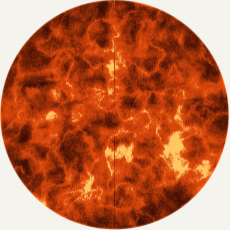
The dish plots the dark features detected in each day’s NASA solar image. Their left and right positions place voices in stereo. In the default score, their height and size help set each voice’s pitch.
Move your pointer over the dish to aim it, or focus it and use the arrow keys.
Which week sounds busier?
Close your eyes and try both clips. Each plays November 24 through December 7, 2025, at one day per second. The second week begins at 0:07.
Reveal the observations and mappings
The second week averaged 23.0 detected dark features per image, compared with 7.9 in the first week. Clip A changes pulse density. Clip B changes tone color. Both use the same seasonal notes, dates, and pace, with integrated loudness matched to −19 LUFS.
Score notes and data sources
- Figure eight
- Each day has an approximate solar declination and equation of time. Height selects a note from a C Lydian chord spread across registers. Horizontal position pans that melody and shifts its attack within the beat, so the two axes also leave cues in mono.
- Spot voices
- Left and right on the disk set stereo position. Vertical position selects a register or chord tone. In pulse and voice modes a larger dark core drops an octave. The pulse mode spreads spots into more attacks on busy days. Tone color adds upper harmonics, while voice mode stacks individual tones.
- Harmony
- A soft chord tone from each active day rings beneath the next two active days. Its pitch follows a fixed interval pattern within the mode. Changing the starting date or route changes the harmony leading into a day.
- Solar images
- One NASA SDO/HMI continuum frame per available UTC day, retrieved through Helioviewer near 03:00 UTC, with a midday fallback. The detector finds connected dark cores in a 768-pixel image and keeps their projected positions and sizes. Small spots and features near the limb can be missed. Counts describe what the detector resolved.
- Silence
- A usable image with zero detections gets one quiet base note. An unavailable or rejected frame gets a full silent beat. Both interrupt sustained harmony.
- Travel
- The forward route wraps within the 365-date window and visits each date once. The outward route alternates earlier and later dates from the starting point.
- Observation window
- This edition uses the archived observations listed above the player.
The pitch choices adapt Matt Russo’s approach to specifying a mapping’s range, direction and scaling. The overlapping chord tones draw on Rick Beato’s use of a repeating voicing within a mode.
Sources · NASA SDO/HMI · Helioviewer archive · NOAA solar position equations · Hairline receiver artwork